
Condensation in LiDAR housings: passive and active humidity control
Start by checking which side of the optical window is fogging.
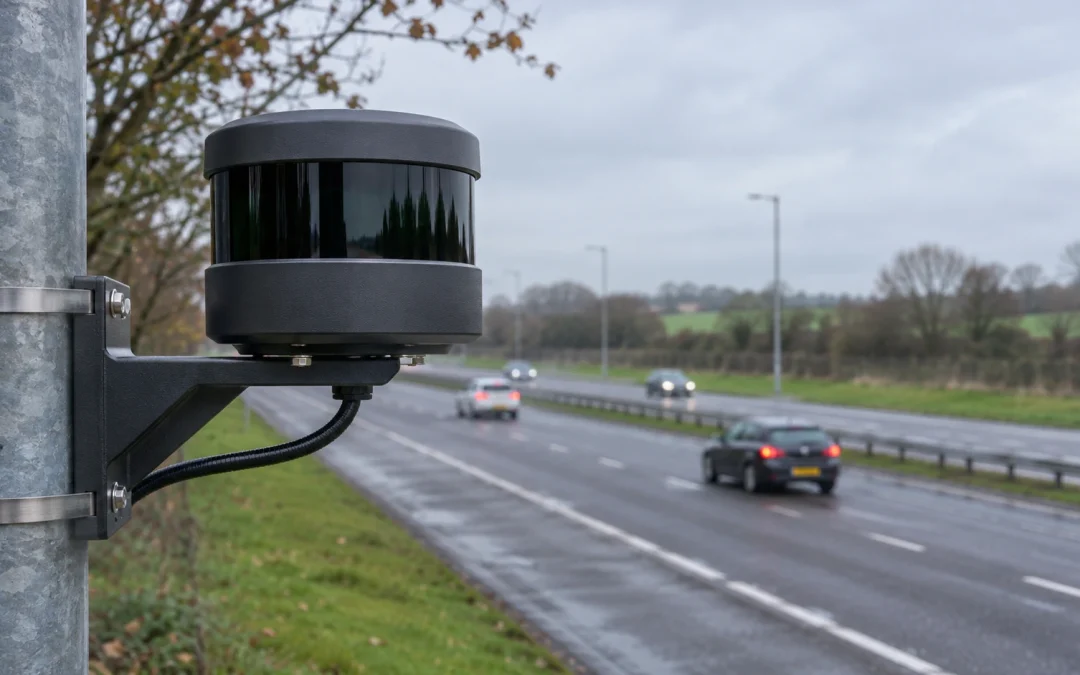
AI image of roadside LiDAR installation illustrates why low-maintenance humidity control matters for outdoor optical sensors.

Small RS membrane dehumidifier for enclosures up to 5L. Larger models available.
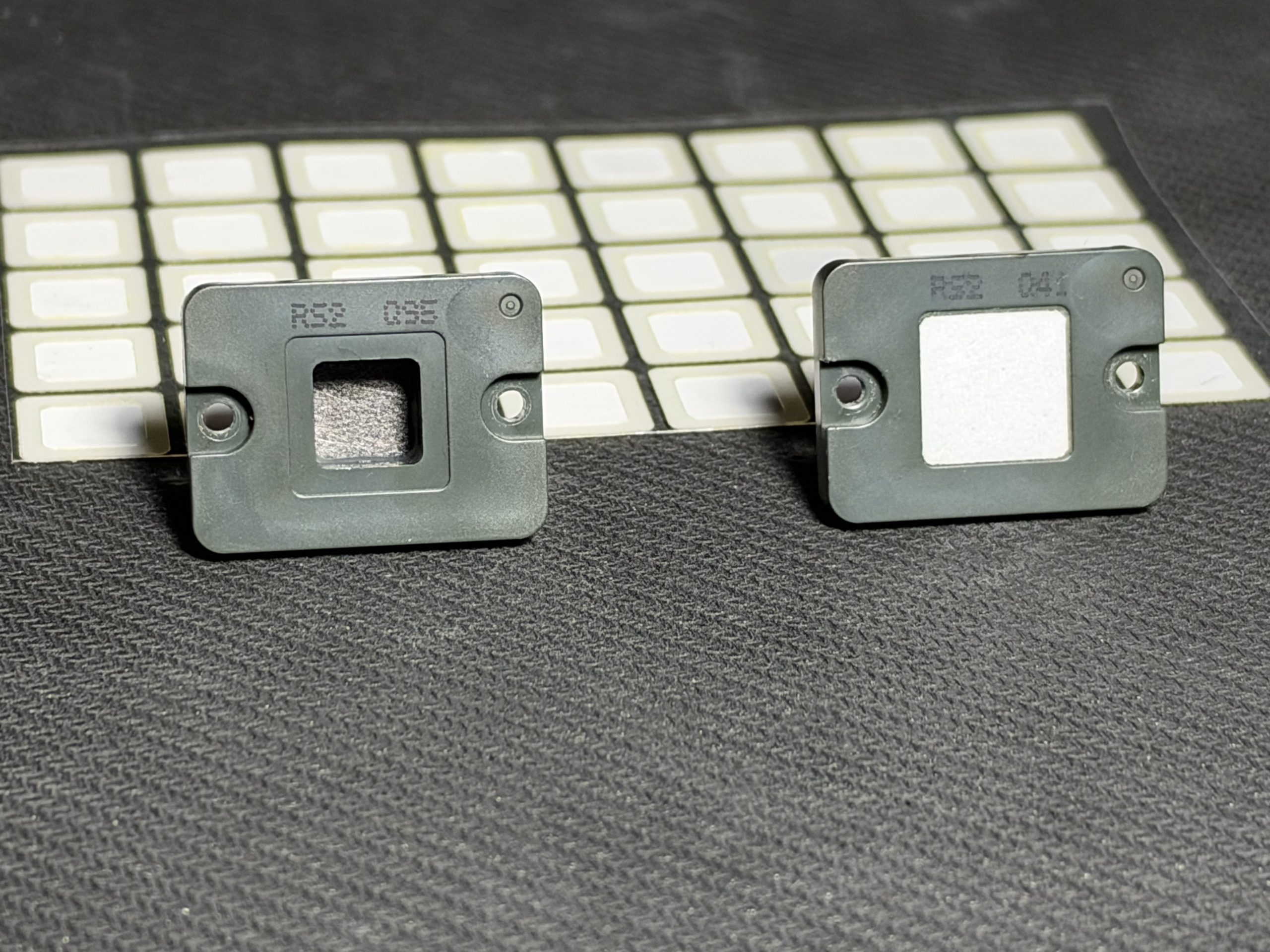
RS membrane with waterproof vent
When a LiDAR window fogs up, first check whether the moisture is on the inside or the outside. Condensation forms when a surface cools below the dew point of the air next to it. The side that fogs tells you whether to reduce moisture inside the housing or address cooling on the outside.
Condensation inside the housing
Even a well-sealed housing can contain moisture trapped during assembly or introduced during servicing. After shutdown, the optical window can cool enough for that moisture to condense on its inside face.
A dew-point example: At 25°C and 65% relative humidity (RH), the internal dew point is about 18°C. If the inside face of the window cools to 15°C while the air stays at 25°C, the condensation threshold is about 54% RH. In practice, aim below that threshold to leave a safety margin.(i)
- Passive humidity buffering with Drykeeper
Drykeeper absorbs moisture as humidity rises and releases it as humidity falls. It needs no power and typically buffers humidity around 50–60% RH in a suitable enclosure. Consider it if the coldest expected window temperature still leaves enough margin at 60% RH. In the example above, that buffering range would not reliably prevent fogging. (ii)
- Active dehumidification with Rosahl
A powered Rosahl membrane dehumidifier transfers moisture from inside the housing to the outside. Consider it when the coldest window temperature calls for a lower internal dew point than passive buffering can provide. Test for condensation while the LiDAR cools after shutdown and again at restart. Run the humidity-control system as it would operate in service. (iii)
Humidity control for remote equipment
For LiDAR and cameras installed on roadside poles, rooftops or remote sites, replacing a desiccant pack can mean a dedicated service visit. Drykeeper offers passive humidity buffering without power or routine regeneration. Where the optical window needs a lower internal dew point and DC power is available, a Rosahl membrane can remove moisture without a drain or a consumable desiccant pack. In either case, check that the window stays clear through the longest expected period between service visits, including any periods when the equipment is switched off.
Condensation outside the housing
Dew forms on the outside when the outer face of the window cools below the outdoor dew point. A hood or recessed window can reduce heat loss to the night sky, provided it doesn’t obstruct the field of view. A controlled window heater can keep an exposed surface above the outdoor dew point. LiDAR cover tests have shown that dew on the cover can interfere with measurements. (iv)
The same checks apply to outdoor CCTV and automatic number plate recognition (ANPR) cameras, thermal imagers, machine-vision systems and laser rangefinders with a protective optical window.
Working on a LiDAR or optical sensor housing?
Tell us the enclosure volume, which side of the window fogs and when it happens. If you have internal humidity and window temperature measurements, share those too. We can help you assess whether Drykeeper or Rosahl is worth testing in your design.