
Introduction
Condensation inside electrical cabinets and sealed enclosures is a common cause of corrosion, electrical leakage, and long-term reliability issues. While silica gel is a popular low-cost solution, it is not always effective in cabinets exposed to temperature changes.
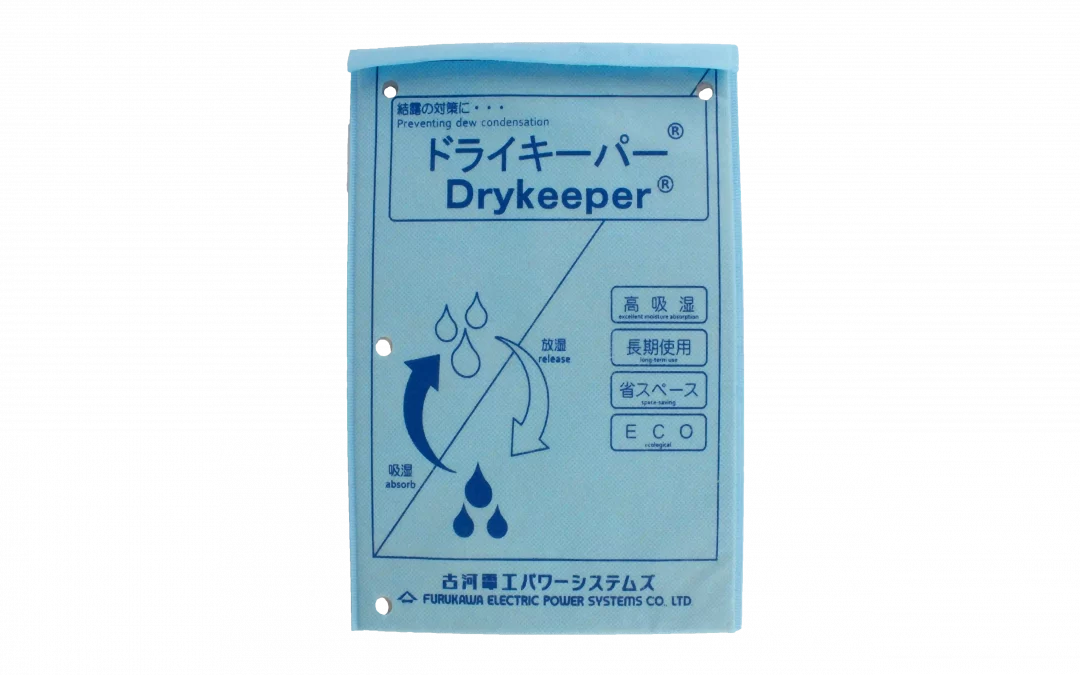
Drykeeper offers a different approach to cabinet condensation prevention, making direct comparisons with silica gel difficult. Rather than acting as a consumable desiccant, Drykeeper provides long-term, maintenance-free humidity control for non-ventilated enclosures.
Why condensation occurs in electronic cabinets
Contrary to widespread belief, condensation does not require large amounts of moisture. In reality, very small quantities of liquid water can cause serious problems. Moreover, in compact electronic enclosures, only a few tenths of a gram of condensed water are enough to trigger corrosion, sensor drift, or intermittent failures.
Temperature changes are the most common cause. As temperature falls, the air’s capacity to hold moisture drops, increasing relative humidity. On reaching the dewpoint, condensation forms—often invisibly at first.
Condensation prevention vs moisture removal
Many humidity control solutions focus on removing as much moisture as possible. In practice, this is not always necessary.
Drykeeper is designed specifically for condensation prevention in sealed or non-ventilated enclosures. Instead of driving humidity to very low levels, it keeps relative humidity below the critical threshold where condensation can occur.
By stabilising internal humidity at approximately 50–60% RH, Drykeeper ensures that the dew point is never reached, even during temperature falls.
How Drykeeper controls humidity in sealed enclosures
Drykeeper works as a passive humidity buffer rather than an active dehumidifier.
When relative humidity rises, it absorbs water vapour from the airinside the cabinet. When relative humidity falls, typically as temperature increases, it releases that moisture back into the enclosure. This reversible process allows the internal environment to remain stable without producing liquid water.
Because Drykeeper expels no moisture from the enclosure, the system remains balanced and self-regulating.
A maintenance-free alternative to silica gel
Silica gel absorbs moisture until it becomes saturated. Once full, it no longer provides protection unless replaced or regenerated. Furthermore, in cabinets subject to temperature cycling, this can happen much faster than expected.
Drykeeper is different. It is not consumed, does not become saturated in normal operation, and requires no servicing or replacement over its typical 10-year service life. This makes it an effective silica gel alternative for applications where access or routine maintenance is difficult.
When a passive cabinet dehumidifier makes sense
Drykeeper is particularly well suited to:
- sealed or non-ventilated electrical cabinets
- electronic enclosures exposed to temperature cycling
- applications where maintenance-free operation is required
- long-life equipment where reliability is critical
In applications needing extremely low humidity or active moisture removal other technologies may be more appropriate. However, many applications need only to prevent condensation to protect sensitive equipment.
Conclusion: choosing the right condensation prevention method
Condensation damage is often subtle, gradual, and expensive to diagnose. By maintaining relative humidity below the condensation threshold, Drykeeper provides a simple and robust solution for long-term cabinet condensation prevention.
For engineers and OEMs looking for a maintenance-free dehumidifier and a reliable alternative to silica gel, buffering humidity-rather than consuming it-can be the most effective approach.