
Drykeeper Application story
Cabinet Condensation Prevention Case Study
Outdoor electrical cabinets face a persistent risk of condensation. This can lead to corrosion, malfunction, and premature component failure. This issue is often blamed on poor sealing, Yet, condensation is driven as much by physics as by enclosure design.
When closing the cabinet door, the air trapped inside always contains moisture. That moisture does not disappear because the enclosure is airtight. If the internal temperature falls to the dew point, water vapour condenses on the coldest internal surfaces.
Even a well-sealed cabinet is thus not immune to condensation. For example, when closing the door in ambient conditions of 25° C and 60% relative humidity, traps moist air inside. From tables, its due point temperature is 16.7° C, thus a fall of only 8.3 ° C, means it reaches is dew point temperature. Any further cooling results in condensation forming inside the cabinet.
Why Condensation Forms in Sealed Cabinets
Condensation does not need much moisture to cause damage. In compact electrical or electronic enclosures. Less than a gram of condensed water can lead to corrosion, sensor drift, or intermittent failures that are difficult to diagnose. Temperature cycling is the dominant driver. As temperature falls, the air’s capacity to hold water vapour decreases. Internal relative humidity rises until it reaches 100 %, at which point condensation begins. Preventing cabinet condensation thus requires controlling humidity and dew point, not sealing gaps.
Drykeeper vs Silica Gel for Cabinet Condensation
Drykeeper is a high‑performance moisture‑absorbing sheet designed for sealed enclosures. It prevents cabinet condensation by stabilising internal humidity and lowering the dew point. It is eco-friendly, REACH and RoHS compliant, and disposal is with normal household waste
Unlike traditional desiccants, Drykeeper does not try to dry the air completely. Instead, it keeps the internal relative humidity at a stable 50–60% RH, a range where condensation will not form during normal temperature drops, even outdoors.
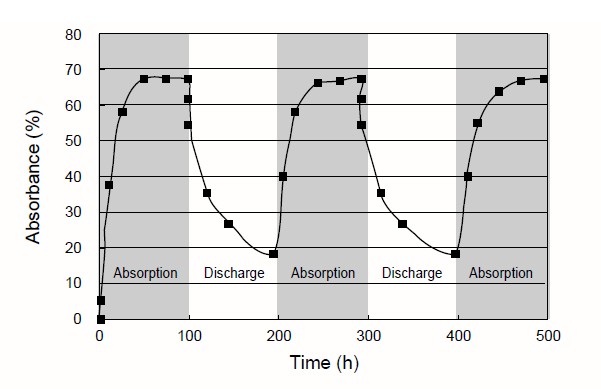
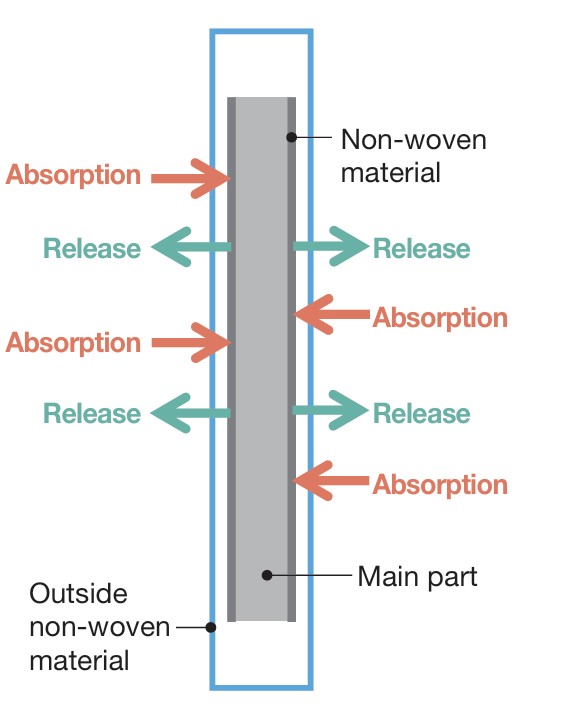
It absorbs moisture when humidity rises and releases it when humidity falls, continually balancing the environment and reducing the dew point. This self‑regulating action allows Drykeeper to operate for extended periods without servicing.
Silica gel however, acts as a consumable moisture sink. Once saturated, its effectiveness declines, making routine inspection and replacement essential. In outdoor cabinets or remote installations, this maintenance is often impractical.
But Drykeeper provides long-term, maintenance-free humidity control by absorbing water vapour when relative humidity rises and releasing it when it falls. In this way it enables natural regeneration. Furthermore, it stabilises the internal environment below the condensation threshold without power or regeneration.
Key Features of Drykeeper
Drykeeper combines passive operation with long service life. Its reversible moisture control mechanism allows continuous operation over extended periods without degradation.
As it needs, electricity, it also suits remote installations with limited power availability. For example, battery-powered systems, and photovoltaic applications. For difficult to access sites Drykeeper offers a reliable alternative to silica gel. Moreover, In outdoor cabinets or remote installations, maintenance often impractical.
Drykeeper provides long-term, maintenance-free humidity control. It absorbs water vapour when relative humidity rises and releases it again when humidity falls, enabling natural regeneration.
This stabilising effect keeps the internal environment below the condensation threshold (dew point) without needing electrical power or periodic replacement.
For cabinets that are difficult to access or deployed in remote locations, Drykeeper offers a reliable alternative to silica gel and anti-condensation heaters.
Application Example: Outdoor Electrical Cabinet
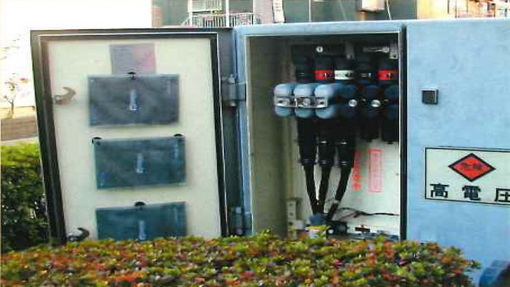
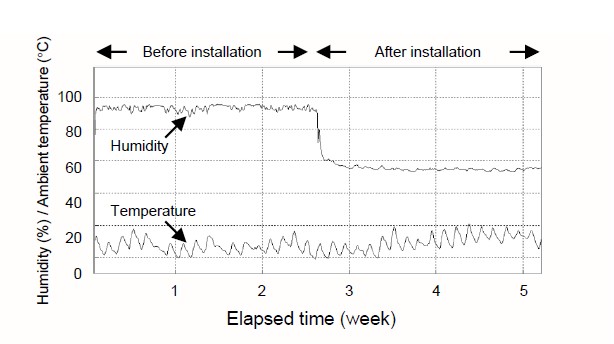
Validation of Drykeeper’s performance Drykeeper’s performance was through long-term field testing conducted in collaboration with Tokyo Electric Power Company in outdoor electrical cabinets.
The results demonstrated clear and sustained improvements:
1. Before installation:
- They observed significant internal condensation
- Relative humidity inside the cabinet approached 100 %.
- Moisture accumulation was clearly visible on internal surfaces
- An elevated risk of corrosion and electrical malfunction.
2. After installing Drykeeper:
- Elimination of internal condensation
- Relative humidity stabilised at approximately 60 % even during temperature fluctuations
3. Long‑term performance:
- Testing continued for over a year.
- Throughout the test period, no condensation reappeared.
- Results confirmed Drykeeper’s long‑term stability and effectiveness.
Conclusion: Maintenance-Free Cabinet Condensation Prevention
Drykeeper proved an effective solution for preventing condensation in sealed outdoor electrical cabinets. Particularly in environments exposed to high humidity and temperature cycling.
By stabilising internal humidity between 50 % and 60 % RH, Drykeeper lowers the dew point. Thus, preventing condensation from forming, even as temperatures fall. Its reversible moisture control mechanism enables long-term, maintenance-free operation without needing electrical power.
For engineers seeking reliable cabinet condensation prevention in sealed or difficult-to-access enclosures, Drykeeper provides a practical and proven alternative to silica gel.